End-Times Investigation
The Island of Dajjal
A call to the mosque
One day in Madinah the call went out: as-salatu jami'ah, the prayer is gathering. People hurried to the mosque, women too. Fatima bint Qays was among them, and she is the one who passed on what happened next.
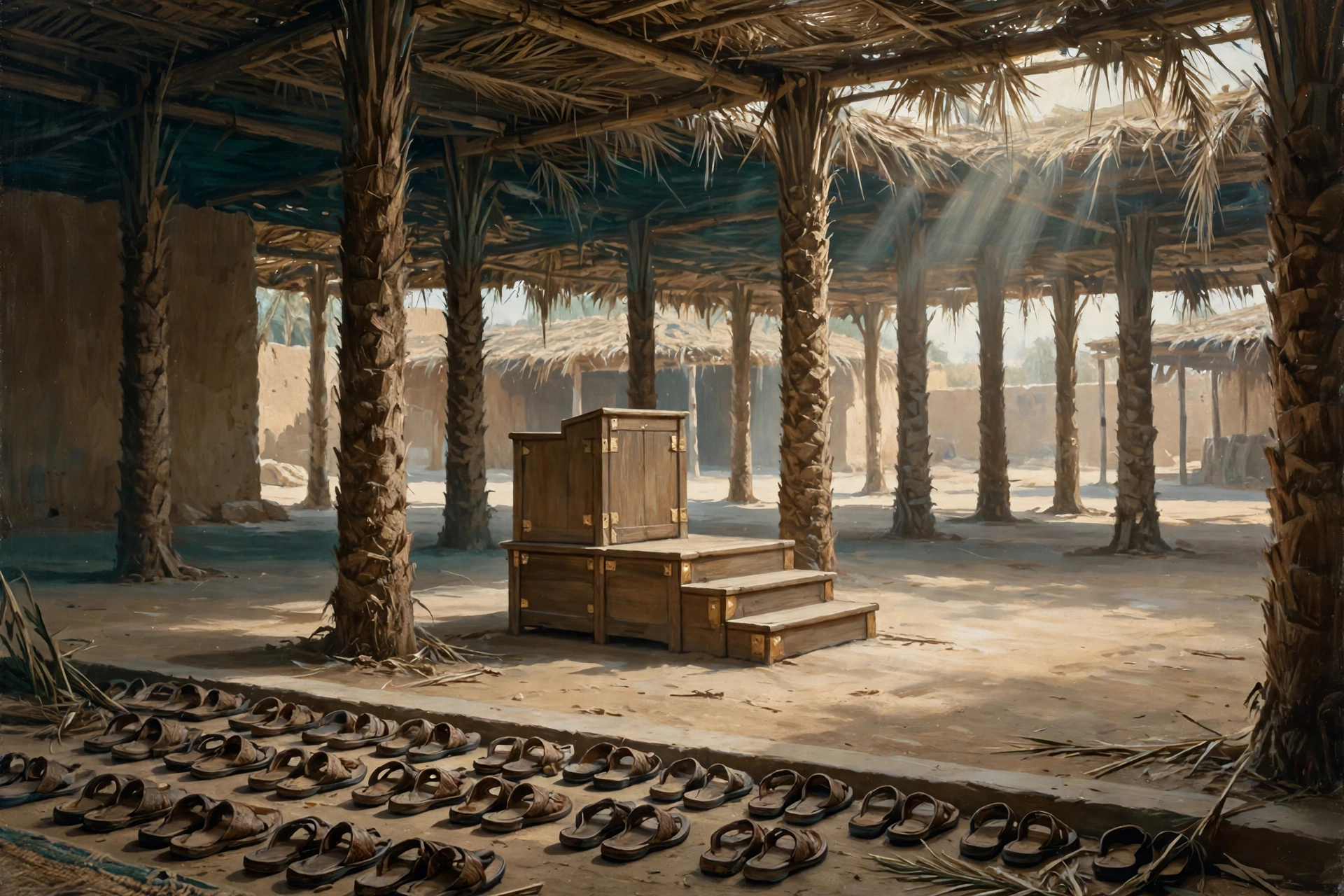
The Prophet ﷺ sat on the pulpit, smiling, and told everyone to stay where they were. He said he had not gathered them to warn them or to give good news. He had gathered them because Tamim al-Dari, a Christian who had just accepted Islam, told him a story that matched what the Prophet ﷺ himself used to say about the Dajjal.
Below is Tamim's account as Sahih Muslim records it, and the shorter version in al-Tirmidhi. Abu Dawud (4328) has a third version with a weak chain. Where it differs, we say so.
حَدَّثَنَا عَبْدُ الْوَارِثِ بْنُ عَبْدِ الصَّمَدِ بْنِ عَبْدِ الْوَارِثِ، وَحَجَّاجُ بْنُ الشَّاعِرِ، كِلاَهُمَا عَنْ عَبْدِ الصَّمَدِ، - وَاللَّفْظُ لِعَبْدِ الْوَارِثِ بْنِ عَبْدِ الصَّمَدِ - حَدَّثَنَا أَبِي، عَنْ جَدِّي، عَنِ الْحُسَيْنِ، بْنِ ذَكْوَانَ حَدَّثَنَا ابْنُ بُرَيْدَةَ، حَدَّثَنِي عَامِرُ بْنُ شَرَاحِيلَ الشَّعْبِيُّ، شَعْبُ هَمْدَانَ أَنَّهُ سَأَلَ فَاطِمَةَ بِنْتَ قَيْسٍ أُخْتَ الضَّحَّاكِ بْنِ قَيْسٍ وَكَانَتْ مِنَ الْمُهَاجِرَاتِ الأُوَلِ فَقَالَ حَدِّثِينِي حَدِيثًا سَمِعْتِيهِ مِنْ رَسُولِ اللَّهِ صلى الله عليه وسلم لاَ تُسْنِدِيهِ إِلَى أَحَدٍ غَيْرِهِ فَقَالَتْ لَئِنْ شِئْتَ لأَفْعَلَنَّ فَقَالَ لَهَا أَجَلْ حَدِّثِينِي . فَقَالَتْ نَكَحْتُ ابْنَ الْمُغِيرَةِ وَهُوَ مِنْ خِيَارِ شَبَابِ قُرَيْشٍ يَوْمَئِذٍ فَأُصِيبَ فِي أَوَّلِ الْجِهَادِ مَعَ رَسُولِ اللَّهِ صلى الله عليه وسلم فَلَمَّا تَأَيَّمْتُ خَطَبَنِي عَبْدُ الرَّحْمَنِ بْنُ عَوْفٍ فِي نَفَرٍ مِنْ أَصْحَابِ رَسُولِ اللَّهِ صلى الله عليه وسلم وَخَطَبَنِي رَسُولُ اللَّهِ صلى الله عليه وسلم عَلَى مَوْلاَهُ أُسَامَةَ بْنِ زَيْدٍ وَكُنْتُ قَدْ حُدِّثْتُ أَنَّ رَسُولَ اللَّهِ صلى الله عليه وسلم قَالَ " مَنْ أَحَبَّنِي فَلْيُحِبَّ أُسَامَةَ " . فَلَمَّا كَلَّمَنِي رَسُولُ اللَّهِ صلى الله عليه وسلم قُلْتُ أَمْرِي بِيَدِكَ فَأَنْكِحْنِي مَنْ شِئْتَ فَقَالَ " انْتَقِلِي إِلَى أُمِّ شَرِيكٍ " . وَأُمُّ شَرِيكٍ امْرَأَةٌ غَنِيَّةٌ مِنَ الأَنْصَارِ عَظِيمَةُ النَّفَقَةِ فِي سَبِيلِ اللَّهِ يَنْزِلُ عَلَيْهَا الضِّيفَانُ فَقُلْتُ سَأَفْعَلُ فَقَالَ " لاَ تَفْعَلِي إِنَّ أُمَّ شَرِيكٍ امْرَأَةٌ كَثِيرَةُ الضِّيفَانِ فَإِنِّي أَكْرَهُ أَنْ يَسْقُطَ عَنْكِ خِمَارُكِ أَوْ يَنْكَشِفَ الثَّوْبُ عَنْ سَاقَيْكِ فَيَرَى الْقَوْمُ مِنْكِ بَعْضَ مَا تَكْرَهِينَ وَلَكِنِ انْتَقِلِي إِلَى ابْنِ عَمِّكِ عَبْدِ اللَّهِ بْنِ عَمْرٍو ابْنِ أُمِّ مَكْتُومٍ " . - وَهُوَ رَجُلٌ مِنْ بَنِي فِهْرٍ فِهْرِ قُرَيْشٍ وَهُوَ مِنَ الْبَطْنِ الَّذِي هِيَ مِنْهُ - فَانْتَقَلْتُ إِلَيْهِ فَلَمَّا انْقَضَتْ عِدَّتِي سَمِعْتُ نِدَاءَ الْمُنَادِي مُنَادِي رَسُولِ اللَّهِ صلى الله عليه وسلم يُنَادِي الصَّلاَةَ جَامِعَةً . فَخَرَجْتُ إِلَى الْمَسْجِدِ فَصَلَّيْتُ مَعَ رَسُولِ اللَّهِ صلى الله عليه وسلم فَكُنْتُ فِي صَفِّ النِّسَاءِ الَّتِي تَلِي ظُهُورَ الْقَوْمِ فَلَمَّا قَضَى رَسُولُ اللَّهِ صلى الله عليه وسلم صَلاَتَهُ جَلَسَ عَلَى الْمِنْبَرِ وَهُوَ يَضْحَكُ فَقَالَ " لِيَلْزَمْ كُلُّ إِنْسَانٍ مُصَلاَّهُ " . ثُمَّ قَالَ " أَتَدْرُونَ لِمَ جَمَعْتُكُمْ " . قَالُوا اللَّهُ وَرَسُولُهُ أَعْلَمُ . قَالَ " إِنِّي وَاللَّهِ مَا جَمَعْتُكُمْ لِرَغْبَةٍ وَلاَ لِرَهْبَةٍ وَلَكِنْ جَمَعْتُكُمْ لأَنَّ تَمِيمًا الدَّارِيَّ كَانَ رَجُلاً نَصْرَانِيًّا فَجَاءَ فَبَايَعَ وَأَسْلَمَ وَحَدَّثَنِي حَدِيثًا وَافَقَ الَّذِي كُنْتُ أُحَدِّثُكُمْ عَنْ مَسِيحِ الدَّجَّالِ حَدَّثَنِي أَنَّهُ رَكِبَ فِي سَفِينَةٍ بَحْرِيَّةٍ مَعَ ثَلاَثِينَ رَجُلاً مِنْ لَخْمٍ وَجُذَامَ فَلَعِبَ بِهِمُ الْمَوْجُ شَهْرًا فِي الْبَحْرِ ثُمَّ أَرْفَئُوا إِلَى جَزِيرَةٍ فِي الْبَحْرِ حَتَّى مَغْرِبِ الشَّمْسِ فَجَلَسُوا فِي أَقْرُبِ السَّفِينَةِ فَدَخَلُوا الْجَزِيرَةَ فَلَقِيَتْهُمْ دَابَّةٌ أَهْلَبُ كَثِيرُ الشَّعَرِ لاَ يَدْرُونَ مَا قُبُلُهُ مِنْ دُبُرِهِ مِنْ كَثْرَةِ الشَّعَرِ فَقَالُوا وَيْلَكِ مَا أَنْتِ فَقَالَتْ أَنَا الْجَسَّاسَةُ . قَالُوا وَمَا الْجَسَّاسَةُ قَالَتْ أَيُّهَا الْقَوْمُ انْطَلِقُوا إِلَى هَذَا الرَّجُلِ فِي الدَّيْرِ فَإِنَّهُ إِلَى خَبَرِكُمْ بِالأَشْوَاقِ . قَالَ لَمَّا سَمَّتْ لَنَا رَجُلاً فَرِقْنَا مِنْهَا أَنْ تَكُونَ شَيْطَانَةً - قَالَ - فَانْطَلَقْنَا سِرَاعًا حَتَّى دَخَلْنَا الدَّيْرَ فَإِذَا فِيهِ أَعْظَمُ إِنْسَانٍ رَأَيْنَاهُ قَطُّ خَلْقًا وَأَشَدُّهُ وِثَاقًا مَجْمُوعَةٌ يَدَاهُ إِلَى عُنُقِهِ مَا بَيْنَ رُكْبَتَيْهِ إِلَى كَعْبَيْهِ بِالْحَدِيدِ قُلْنَا وَيْلَكَ مَا أَنْتَ قَالَ قَدْ قَدَرْتُمْ عَلَى خَبَرِي فَأَخْبِرُونِي مَا أَنْتُمْ قَالُوا نَحْنُ أُنَاسٌ مِنَ الْعَرَبِ رَكِبْنَا فِي سَفِينَةٍ بَحْرِيَّةٍ فَصَادَفْنَا الْبَحْرَ حِينَ اغْتَلَمَ فَلَعِبَ بِنَا الْمَوْجُ شَهْرًا ثُمَّ أَرْفَأْنَا إِلَى جَزِيرَتِكَ هَذِهِ فَجَلَسْنَا فِي أَقْرُبِهَا فَدَخَلْنَا الْجَزِيرَةَ فَلَقِيَتْنَا دَابَّةٌ أَهْلَبُ كَثِيرُ الشَّعَرِ لاَ يُدْرَى مَا قُبُلُهُ مِنْ دُبُرِهِ مِنْ كَثْرَةِ الشَّعَرِ فَقُلْنَا وَيْلَكِ مَا أَنْتِ فَقَالَتْ أَنَا الْجَسَّاسَةُ . قُلْنَا وَمَا الْجَسَّاسَةُ قَالَتِ اعْمِدُوا إِلَى هَذَا الرَّجُلِ فِي الدَّيْرِ فَإِنَّهُ إِلَى خَبَرِكُمْ بِالأَشْوَاقِ فَأَقْبَلْنَا إِلَيْكَ سِرَاعًا وَفَزِعْنَا مِنْهَا وَلَمْ نَأْمَنْ أَنْ تَكُونَ شَيْطَانَةً فَقَالَ أَخْبِرُونِي عَنْ نَخْلِ بَيْسَانَ قُلْنَا عَنْ أَىِّ شَأْنِهَا تَسْتَخْبِرُ قَالَ أَسْأَلُكُمْ عَنْ نَخْلِهَا هَلْ يُثْمِرُ قُلْنَا لَهُ نَعَمْ . قَالَ أَمَا إِنَّهُ يُوشِكُ أَنْ لاَ تُثْمِرَ قَالَ أَخْبِرُونِي عَنْ بُحَيْرَةِ الطَّبَرِيَّةِ . قُلْنَا عَنْ أَىِّ شَأْنِهَا تَسْتَخْبِرُ قَالَ هَلْ فِيهَا مَاءٌ قَالُوا هِيَ كَثِيرَةُ الْمَاءِ . قَالَ أَمَا إِنَّ مَاءَهَا يُوشِكُ أَنْ يَذْهَبَ . قَالَ أَخْبِرُونِي عَنْ عَيْنِ زُغَرَ . قَالُوا عَنْ أَىِّ شَأْنِهَا تَسْتَخْبِرُ قَالَ هَلْ فِي الْعَيْنِ مَاءٌ وَهَلْ يَزْرَعُ أَهْلُهَا بِمَاءِ الْعَيْنِ قُلْنَا لَهُ نَعَمْ هِيَ كَثِيرَةُ الْمَاءِ وَأَهْلُهَا يَزْرَعُونَ مِنْ مَائِهَا . قَالَ أَخْبِرُونِي عَنْ نَبِيِّ الأُمِّيِّينَ مَا فَعَلَ قَالُوا قَدْ خَرَجَ مِنْ مَكَّةَ وَنَزَلَ يَثْرِبَ . قَالَ أَقَاتَلَهُ الْعَرَبُ قُلْنَا نَعَمْ . قَالَ كَيْفَ صَنَعَ بِهِمْ فَأَخْبَرْنَاهُ أَنَّهُ قَدْ ظَهَرَ عَلَى مَنْ يَلِيهِ مِنَ الْعَرَبِ وَأَطَاعُوهُ قَالَ لَهُمْ قَدْ كَانَ ذَلِكَ قُلْنَا نَعَمْ . قَالَ أَمَا إِنَّ ذَاكَ خَيْرٌ لَهُمْ أَنْ يُطِيعُوهُ وَإِنِّي مُخْبِرُكُمْ عَنِّي إِنِّي أَنَا الْمَسِيحُ وَإِنِّي أُوشِكُ أَنْ يُؤْذَنَ لِي فِي الْخُرُوجِ فَأَخْرُجَ فَأَسِيرَ فِي الأَرْضِ فَلاَ أَدَعَ قَرْيَةً إِلاَّ هَبَطْتُهَا فِي أَرْبَعِينَ لَيْلَةً غَيْرَ مَكَّةَ وَطَيْبَةَ فَهُمَا مُحَرَّمَتَانِ عَلَىَّ كِلْتَاهُمَا كُلَّمَا أَرَدْتُ أَنْ أَدْخُلَ وَاحِدَةً أَوْ وَاحِدًا مِنْهُمَا اسْتَقْبَلَنِي مَلَكٌ بِيَدِهِ السَّيْفُ صَلْتًا يَصُدُّنِي عَنْهَا وَإِنَّ عَلَى كُلِّ نَقْبٍ مِنْهَا مَلاَئِكَةً يَحْرُسُونَهَا قَالَتْ قَالَ رَسُولُ اللَّهِ صلى الله عليه وسلم وَطَعَنَ بِمِخْصَرَتِهِ فِي الْمِنْبَرِ " هَذِهِ طَيْبَةُ هَذِهِ طَيْبَةُ هَذِهِ طَيْبَةُ " . يَعْنِي الْمَدِينَةَ " أَلاَ هَلْ كُنْتُ حَدَّثْتُكُمْ ذَلِكَ " . فَقَالَ النَّاسُ نَعَمْ " فَإِنَّهُ أَعْجَبَنِي حَدِيثُ تَمِيمٍ أَنَّهُ وَافَقَ الَّذِي كُنْتُ أُحَدِّثُكُمْ عَنْهُ وَعَنِ الْمَدِينَةِ وَمَكَّةَ أَلاَ إِنَّهُ فِي بَحْرِ الشَّامِ أَوْ بَحْرِ الْيَمَنِ لاَ بَلْ مِنْ قِبَلِ الْمَشْرِقِ ما هُوَ مِنْ قِبَلِ الْمَشْرِقِ مَا هُوَ مِنْ قِبَلِ الْمَشْرِقِ مَا هُوَ " . وَأَوْمَأَ بِيَدِهِ إِلَى الْمَشْرِقِ . قَالَتْ فَحَفِظْتُ هَذَا مِنْ رَسُولِ اللَّهِ صلى الله عليه وسلم .
Amir b. Sharahil Sha'bi Sha'b Hamdan reported that he asked Fatima, daughter of Qais and sister of ad-Dahhak b. Qais and she was the first amongst the emigrant women:Narrate to me a hadith which you had heard directly from Allah's Messenger (ﷺ) and there is no extra link in between them. She said: Very well, if you like, I am prepared to do that, and he said to her: Well, do It and narrate that to me. She said: I married the son of Mughira and he was a chosen young man of Quraish at that time, but he fell as a martyr in the first Jihad (fighting) on the side of Allah's Messenger (ﷺ). When I became a widow, 'Abd al-Rahman b. Auf, one amongst the group of the Companions of Allah's Messenger (ﷺ), sent me the proposal of marriage. Allah's Messenger (ﷺ) also sent me such a message for his freed slave Usama b. Zaid. And it had been conveyed to me that Allah's Messenger (ﷺ) had said (about Usama): He who loves me should also love Usama. When Allah's Messenger (ﷺ) talked to me (about this matter), I said: My affairs are in your hand. You may marry me to anyone whom you like. He said: You better shift now to the house of Umm Sharik, and Umm Sharik was a rich lady from amongst the Ansar. She spent generously for the cause of Allah and entertained guests very hospitably. I said: Well, I will do as you like. He said: Do not do that for Umm Sharik is a woman who is very frequently visited by guests and I do not like that your head may be uncovered or the cloth may be removed from your shank and the strangers may catch sight of them which you abhor. You better shift to the house of your cousin 'Abdullah b. 'Amr b. Umm Maktum and he is a person of the Bani Fihr branch of the Quraish, and he belonged to that tribe (to which Fatima) belonged. So I shifted to that house, and when my period of waiting was over, I heard the voice of an announcer making an announcement that the prayer would be observed in the mosque (where) congregational prayer (is observed). So I set out towards that mosque and observed prayer along with Allah's Messenger (ﷺ) and I was in the row of the women which was near the row of men. When Allah's Messenger (ﷺ) had finished his prayer, he sat on the pulpit smiling and said: Every worshipper should keep sitting at his place. He then said: Do you know why I had asked you to assemble? They said: Allah and His Messenger know best. He said: By Allah. I have not made you assemble for exhortation or for a warning, but I have detained you here, for Tamim Dari, a Christian, who came and accepted Islam, told me something, which agrees with what I was telling, you about the Dajjal. He narrated to me that he had sailed in a ship along with thirty men of Bani Lakhm and Bani Judham and had been tossed by waves in the ocean for a month. Then these (waves) took them (near) the land within the ocean (island) at the time of sunset. They sat in a small side-boat and entered that island. There was a beast with long thick hair (and because of these) they could not distinguish his face from his back. They said: Woe to you, who can you be? Thereupon it said: I am al-Jassasa. They said: What is al-Jassasa? And it said: O people, go to this person in the monastery as he is very much eager to know about you. He (the narrator) said: When it named a person for us we were afraid of it lest it should be a devil. Then we hurriedly went on till we came to that monastery and found a well-built person there with his hands tied to his neck and having iron shackles between his two legs up to the ankles. We said: Woe be upon thee, who are you? And he said: You would soon come to know about me. but tell me who are you. We said: We are people from Arabia and we embarked upon a boat but the sea-waves had been driving us for one month and they brought as near this island. We got Into the side-boats and entered this island and here a beast met us with profusely thick hair and because of the thickness of his hair his face could not be distinguished from his back. We said: Woe be to thee, who are you? It said: I am al- Jassasa. We said: What is al-Jassasa? And it said: You go to this very person in the monastery for he is eagerly waiting for you to know about you. So we came to you in hot haste fearing that that might be the Devil. He (that chained person) said: Tell me about the date-palm trees of Baisan. We said: About what aspect of theirs do you seek information? He said: I ask you whether these trees bear fruit or not. We said: yes. Thereupon he said: I think these would not bear fruits. He said: Inform me about the lake of Tabariyya? We said: Which aspect of it do you want to know? He said: Is there water in it? They said: There is abundance of water in it. Thereupon he said: I think it would soon become dry. He again said: Inform me about the spring of Zughar. They said: Which aspect of it you want to know? He (the chained person) said: Is there water in it and does it irrigate (the land)? We said to him: Yes, there is abundance of water in it and the inhabitants (of Medina) irrigate (land) with the help of it, He said: Inform me about the unlettered Prophet; what has he done? We said: He has come out from Mecca and has settled In Yathrib (Medina). He said: Do the Arabs fight against him? We said: Yes. He said: How did he deal with them? We informed him that he had overcome those in his neighbourhood and they had submitted themselves before him. Thereupon he said to us: Has it actually happened? We said: Yes. Thereupon he said: If it is so that is better for them that they should show obedience to him. I am going to tell you about myself and I am Dajjal and would be soon permitted to get out and so I shall get out and travel in the land, and will not spare any town where I would not stay for forty nights except Mecca and Medina as these two (places) are prohibited (areas) for me and I would not make an attempt to enter any one of these two. An angel with a sword in his hand would confront me and would bar my way and there would be angels to guard every passage leading to it; then Allah's Messenger (ﷺ) striking the pulpit with the help of the end of his staff said: This implies Taiba meaning Medina. Have I not, told you an account (of the Dajjal) like this? 'The people said: Yes, and this account narrated by Tamim Dari was liked by me for it corroborates the account which I gave to you in regard to him (Dajjal) at Medina and Mecca. Behold he (Dajjal) is in the Syrian sea (Mediterranean) or the Yemen sea (Arabian sea). Nay, on the contrary, he is in the east, he is in the east, he is in the east, and he pointed with his hand towards the east. I (Fatima bint Qais) said: I preserved it in my mind (this narration from Allah's Messenger (ﷺ)
حَدَّثَنَا مُحَمَّدُ بْنُ بَشَّارٍ، حَدَّثَنَا مُعَاذُ بْنُ هِشَامٍ، حَدَّثَنَا أَبِي، عَنْ قَتَادَةَ، عَنِ الشَّعْبِيِّ، عَنْ فَاطِمَةَ بِنْتِ قَيْسٍ، أَنَّ نَبِيَّ اللَّهِ صلى الله عليه وسلم صَعِدَ الْمِنْبَرَ فَضَحِكَ فَقَالَ " إِنَّ تَمِيمًا الدَّارِيَّ حَدَّثَنِي بِحَدِيثٍ فَفَرِحْتُ فَأَحْبَبْتُ أَنْ أُحَدِّثَكُمْ حَدَّثَنِي أَنَّ نَاسًا مِنْ أَهْلِ فِلَسْطِينَ رَكِبُوا سَفِينَةً فِي الْبَحْرِ فَجَالَتْ بِهِمْ حَتَّى قَذَفَتْهُمْ فِي جَزِيرَةٍ مِنْ جَزَائِرِ الْبَحْرِ فَإِذَا هُمْ بِدَابَّةٍ لَبَّاسَةٍ نَاشِرَةٍ شَعْرَهَا فَقَالُوا مَا أَنْتِ قَالَتْ أَنَا الْجَسَّاسَةُ . قَالُوا فَأَخْبِرِينَا . قَالَتْ لاَ أُخْبِرُكُمْ وَلاَ أَسْتَخْبِرُكُمْ وَلَكِنِ ائْتُوا أَقْصَى الْقَرْيَةِ فَإِنَّ ثَمَّ مَنْ يُخْبِرُكُمْ وَيَسْتَخْبِرُكُمْ . فَأَتَيْنَا أَقْصَى الْقَرْيَةِ فَإِذَا رَجُلٌ مُوثَقٌ بِسِلْسِلَةٍ فَقَالَ أَخْبِرُونِي عَنْ عَيْنِ زُغَرَ . قُلْنَا مَلأَى تَدْفُقُ . قَالَ أَخْبِرُونِي عَنِ الْبُحَيْرَةِ قُلْنَا مَلأَى تَدْفُقُ . قَالَ أَخْبِرُونِي عَنْ نَخْلِ بَيْسَانَ الَّذِي بَيْنَ الأُرْدُنِّ وَفِلَسْطِينَ هَلْ أَطْعَمَ قُلْنَا نَعَمْ . قَالَ أَخْبِرُونِي عَنِ النَّبِيِّ هَلْ بُعِثَ قُلْنَا نَعَمْ . قَالَ أَخْبِرُونِي كَيْفَ النَّاسُ إِلَيْهِ قُلْنَا سِرَاعٌ . قَالَ فَنَزَّ نَزْوَةً حَتَّى كَادَ . قُلْنَا فَمَا أَنْتَ قَالَ إِنَّهُ الدَّجَّالُ وَإِنَّهُ يَدْخُلُ الأَمْصَارَ كُلَّهَا إِلاَّ طَيْبَةَ . وَطَيْبَةُ الْمَدِينَةُ " . قَالَ أَبُو عِيسَى وَهَذَا حَدِيثٌ صَحِيحٌ غَرِيبٌ مِنْ حَدِيثِ قَتَادَةَ عَنِ الشَّعْبِيِّ وَقَدْ رَوَاهُ غَيْرُ وَاحِدٍ عَنِ الشَّعْبِيِّ عَنْ فَاطِمَةَ بِنْتِ قَيْسٍ .
Fatimah bint Qais narrated that Allah's Prophet(s.a.w) ascended the Minbar, he laughed, and said:"Verily, Tamim Ad-Dari narrated a story to me, and it made me happy, so I wanted to narrate it to you[what he narrated to me]. Some people among the inhabitants of Palestine traveled by boat in the sea, taking them here and there, until it cast them on an island among the islands at sea. There they found a beast, clothed with its hair flowing out. They said: 'What are you?' It said: 'I am Al-Jassasah.' They said: 'Give us some news.' It said: 'I shall not give you any news, nor do I want any of your news. But go to the furthest village, for there is someone who will give you news and seek your news.' So we went to the furthest village, and there was a man fettered with chains. He said: 'Inform me about the spring of Zughar.' We said: ' It is full and flowing.' He said: 'Inform me about Al-Buhairah.' We said,'It is full and flowing.' He said: 'Inform me about the date groves of Baysan which is between Jordan and Palestine, do they produce food?' We said: 'Yes.' He said: 'Inform me about the Prophet, has he been sent?' We said: 'Yes.' He said: 'Inform me how the people came to him.' We said: 'Quickly.' He leaped up to try and escape.' We said: 'What are you?' He said: 'I am the Dajjal.'" (The Prophet(s.a.w) said) "He will enter all of the lands except At-Taibah, and At-Taibah is Al-Madinah
What the text says
Read the reports side by side and six details stand out.
- A month at seaThe waves tossed the ship for a month before it reached an island.
- A creature covered in hairSo hairy that its front could not be told from its back.
- It spokeIt called itself al-Jassasa and sent the men on to a man in a building.
- A buildingA dayr (monastery) in Muslim. In al-Tirmidhi, a place at the far end of the village.
- A man in ironThe biggest man they had ever seen. His hands were tied to his neck, with iron between his knees and ankles.
- From the eastAsked where he is, the Prophet ﷺ said: in the sea of Sham, or the sea of Yemen? No, from the direction of the east. And he pointed east.
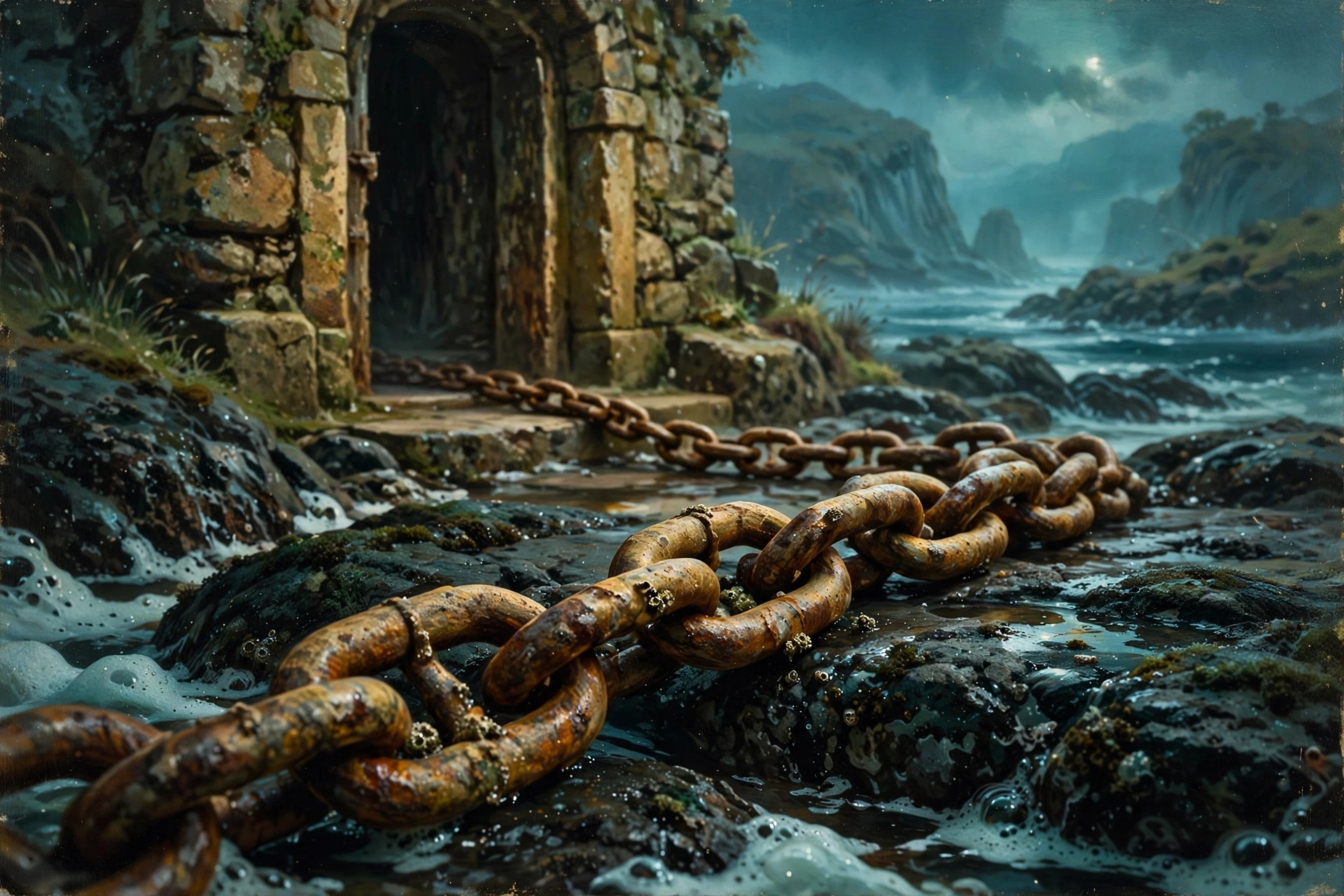
That is everything. The hadith gives no name for the island, no size, no port the ship left from, and no name for the sea.
Al-Qadi 'Iyad, quoted by al-Nawawi in his commentary on Muslim, says the words ma huwa in the last line are not a denial. They stress the point: he is in the lands of the east.
How far can we get?
We do not know where this island is. The hadith does not name it and no scholar has fixed it. So we are not here to announce an answer.
What we can do is smaller and more honest. Write down only what the text says. Then ask of each candidate island: does the text rule it out, allow it, or say nothing? A guess that breaks a clue is dropped. A guess that fits every clue is still only a guess.
We use this for places only. The hadith is not used here to point at any living person, state or group.
Clue one: the east
The Prophet ﷺ pointed east. Measured from Madinah, due east is 90 degrees. The map and table show islands in that direction, with the straight-line distance and starting bearing from Madinah, computed from their coordinates.
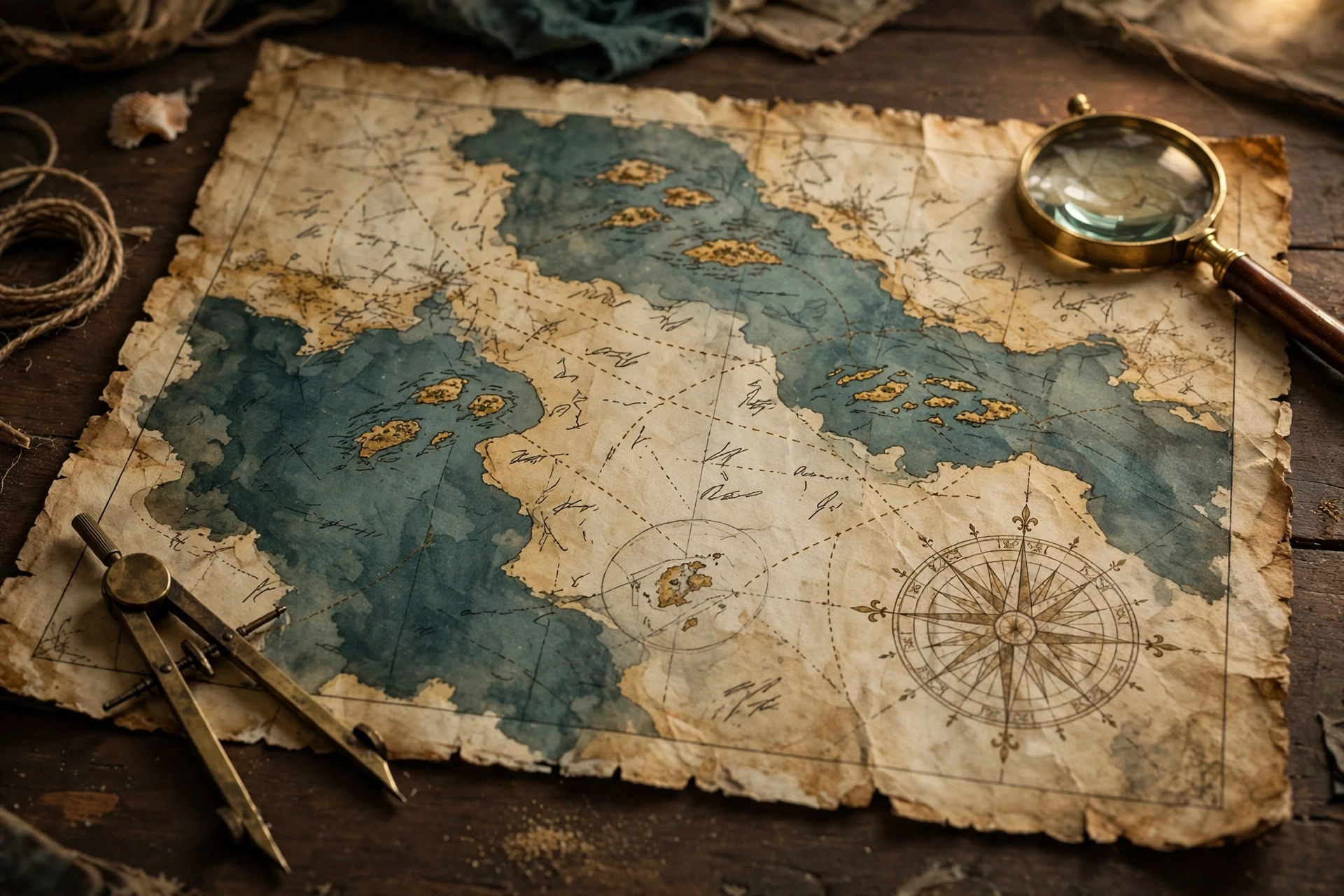
- Madinah
- "The directions of the east" (illustrative)
- Islands in that direction
- Outside the band
| Island | From Madinah | Bearing | Sea |
|---|---|---|---|
| Bahrain | 1,113 km | 79° | Persian Gulf |
| Sir Bani Yas | 1,315 km | 88° | Persian Gulf |
| Qeshm | 1,647 km | 78° | Strait of Hormuz |
| Daymaniyat | 1,876 km | 88° | Gulf of Oman |
| Masirah | 2,020 km | 99° | Arabian Sea |
| Astola | 2,444 km | 83° | Arabian Sea |
| Socotra | 2,007 km | 129° | Gulf of Aden |
Great-circle distance and starting bearing from Madinah (90° is due east).
Many islands fit. Two of them, Sir Bani Yas and Daymaniyat, sit closer to due east than Astola. Direction alone cannot choose an island. It only rules out the west and the south.
Clue two: a month at sea
Al-Tirmidhi says the sailors were people of Palestine. From there the sea road east starts at Ayla (today's Aqaba) on the Red Sea, runs down to Bab al-Mandab, around southern Arabia and up into the Arabian Sea. To Astola that is about 4,870 km.
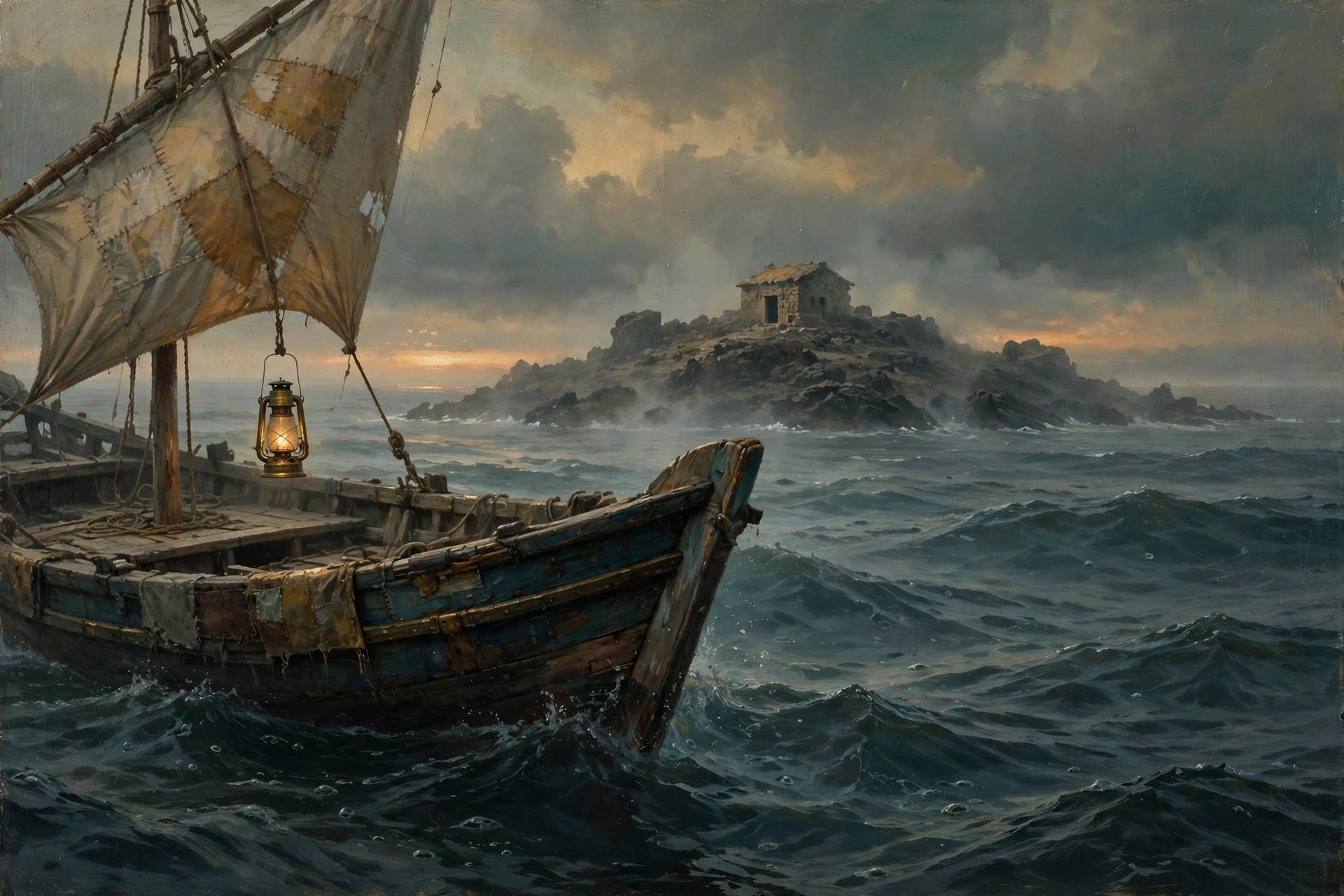
A sailing ship driven by a storm drifts at perhaps 1 to 3 knots, which is about 1,300 to 4,000 km in thirty days. That speed is our assumption, not a figure from the hadith.
So a ship leaving Aqaba would run out of month before reaching Astola. But the hadith never says they left from Palestine. Lakhm and Judham had kin across Arabia, and a ship already in the Gulf could reach any of the Gulf islands within a month. This clue leans away from Astola. It does not settle anything.
Clue three: a monastery
Tamim was a Christian before Islam, and he called the building a dayr, a monastery. In 1992 excavators on Sir Bani Yas, an island off Abu Dhabi, found a Christian monastery and church dated from about 600 CE and used until about 750 CE, which is Tamim's own lifetime. On Kharg Island, off Iran, there is a larger monastery complex, dated by different scholars between the 7th and 9th centuries.
This does not make either of them the island. No scholar says so, and neither do we. It only shows that the one building the hadith names is the kind of building that stood on islands east of Madinah in that time. None has been reported on Astola.
Why Astola comes up
Astola, called Haft Talar (seven hills) locally, is a flat-topped, dry, uninhabited island about 25 km off the coast of Pasni in Balochistan, Pakistan. In the rough monsoon months, from June to August, it is cut off from the mainland.
In recent years some documentary makers and online researchers have proposed that it is Tamim's island. No classical scholar made this link; it comes from modern researchers. Their points are three: it lies in the Arabian Sea, east of Madinah; Greek writers, such as Arrian in his Indica, mention an island there (Nosala) that sailors feared; and it holds the ruins of an old Hindu temple linked to Kali, where they see a likeness to the Jassasa.
Facts, as of 28 October 2026
- Pakistan's largest offshore island, about 6.7 km². Uninhabited. Wikipedia, "Astola Island"
- Ruins of an old Hindu temple of Kali, not dated. A small mosque named after Khawaja Khizr is used by mainland fishermen in season. Ramsar Information Sheet, 2001 (via Wikipedia)
- Pakistan's first Marine Protected Area since June 2017. Nesting beach for green and hawksbill turtles. Wikipedia, "Astola Island"
- Arrian's Nosala, "now known as Astola", feared by Greek sailors. A. V. Williams Jackson (ed.), History of India, vol. 2, ch. 4 (1906), Wikisource
The comparison with Kali
Those who make this proposal compare the hadith with the figure of Kali, point by point. We set the comparison out fairly. We do not rule it in, and we do not rule it out.
| Point | What the hadith says | What can be said |
|---|---|---|
| Hair | Covered in hair. In al-Tirmidhi, its hair spread out. | Both mention hair. Whether long hair on a head and hair over a whole body are the same picture is for the reader to weigh. |
| Face | Its front could not be told from its back. | People point to Kali's fearsome face. The hadith gives no description of a face. |
| Tongue | Not mentioned in Muslim, al-Tirmidhi or Abu Dawud. | Kali's images show her tongue out. This detail comes from the images, not from the hadith. |
| Sex | "She said": the verb is feminine. One weak report says "a woman". | Kali is a goddess. In Arabic, dabba (creature) is grammatically feminine for any animal, and the Quran uses it for every living thing (Hud 11:6). So "she" may or may not show the sex. |
| Creature or image | It met the sailors, spoke, refused their questions and sent them on. | The proposal has to read this as a figure or an image. The hadith calls it a creature that moves and speaks. Readers will weigh that differently. |
| The building | A dayr, a monastery, named by a former Christian. | Astola's ruins are described as an old temple. The 2001 Ramsar sheet calls them only "ancient", and we found no dating study behind the "4,000 years" figure that circulates. |
So we do not know whether the Jassasa and Kali are connected. The classical scholars never made that link. They asked what the Jassasa is, never whose god it might be. And Kali is a goddess worshipped by millions of people today. The Quran tells us not to insult what others call upon (al-An'am 6:108), and this page does not.
What earlier scholars said
- al-Qadi 'Iyad, via al-NawawiSharh Sahih Muslim
قال القاضي لفظة ما هو زائدة صلة للكلام ليست بنافية والمراد إثبات أنه في جهات المشرق
"Ma huwa" is not a negation; the meaning is to affirm that he is in the directions of the east. No island is named.- Ibn Hajar, via al-Saffarinial-Buhur al-Zakhira
شيطان موثق بسبعين حلقة في بعض جزائر اليمن ... ولعل هؤلاء مع كونهم ثقات تلقوا ذلك من بعض كتب أهل الكتاب
Some early people said the Dajjal is a devil chained "in one of the islands of Yemen". Ibn Hajar thought they, though trustworthy, may have taken this from the books of the People of the Book. Placing the island has been tried before, without settling it.- al-Qurtubial-Tadhkira
وروي عن عبد الله بن عمر رضي الله عنهما أن هذه الدابة هي الجساسة
Reports a view, from 'Abd Allah ibn 'Umar, that the Jassasa is the Beast of the Earth of al-Naml 27:82. Classical discussion is about what the Jassasa is.
What we still do not know
- Which islandThe hadith does not name it, and no scholar settled it. Astola is possible. So are many others, and some may no longer carry any name we would recognise.
- What the Jassasa isScholars differ. Al-Qurtubi quotes one view that it is the Beast of the Earth. The text only says it is a hairy creature that speaks.
- Whether anyone could reach himThe man in the monastery says he is about to be given permission to come out. That moment is Allah's to decide, not an expedition's.
So we leave the map open. Suppose someone does find the island one day. They will have found a place, not a sign fulfilled. The Prophet ﷺ told this story to warn us about the Dajjal, and he also told us how to be safe from him.
For the Dajjal himself, read what the hadith says about his nature and origin. Is Dajjal a Human? An Analysis
What the Prophet ﷺ told us to do
- Memorise the opening of al-Kahf"Whoever memorises ten verses from the beginning of Surat al-Kahf will be protected from the Dajjal."Muslim 809a
- Seek refuge in every prayerاللَّهُمَّ إِنِّي أَعُوذُ بِكَ مِنْ عَذَابِ جَهَنَّمَ وَمِنْ عَذَابِ الْقَبْرِ وَمِنْ فِتْنَةِ الْمَحْيَا وَالْمَمَاتِ وَمِنْ شَرِّ فِتْنَةِ الْمَسِيحِ الدَّجَّالِAfter the final tashahhud: "O Allah, I seek refuge in You from the punishment of Hell, the punishment of the grave, the trials of life and death, and the evil of the trial of the Messiah al-Dajjal."Muslim 588a