Arabia returns to meadows and rivers
In brief
The Prophet ﷺ said the Hour will not come until the land of the Arabs returns to being meadows and rivers: the desert of Arabia turning green with pasture and flowing water. He mentioned it together with wealth overflowing.
The word 'returns' tells us Arabia was green before, and geologists confirm it. In the periods they call 'Green Arabia', the peninsula had lakes and rivers, and satellite images show old riverbeds under the sand. Recent rains and irrigation projects have turned some areas green, but whether that is this sign is not something the text or this site decides.
'If the Hour comes while one of you has a sapling in his hand, let him plant it.'
Where it sits in the sequence
The narrations do not put these in order, and many of them overlap. Sahih al-Bukhari 7121 lists several together.
Strongest narrations
Read all in the archive →Tags are automatic and unreviewed.
No sahih or hasan narration is tagged with this sign yet.
Weak and ungraded reports on this sign
3
Shown for study, not as established. Includes Kitab al-Fitan of Nu'aym ibn Hammad, which is ungraded and weak overall.
Not graded under this archive's policy. The verdicts recorded are listed.
أخبرنا أبو عبد الله الصفار، ثنا محمد بن إبراهيم بن أرومة، ثنا الحسين بن حفص، ثنا سفيان، عن سهيل بن أبي صالح، عن أبيه، عن أبي هريرة رضي الله عنه، قال سفيان: لا أعلم إلا قد رفعه، قال: قال رسول الله صلى الله عليه وسلم: «لا تقوم الساعة حتى تعود أرض العرب مروجا وأنهارا» هذا حديث صحيح على شرط مسلم، ولم يخرجاه "
No translation yet. Arabic only.
AI draft, not reviewed by an editor. Read the Arabic for the meaning.
Not graded under this archive's policy. The verdicts recorded are listed.
حدثنا محمد بن الصباح، قال: حدثنا إسماعيل يعني ابن زكريا، عن سهيل، عن أبيه، عن أبي هريرة، قال: قال رسول الله صلى الله عليه وسلم: " لا تقوم الساعة حتى تعود أرض العرب مروجا وأنهارا، وحتى يسير الراكب بين العراق ومكة، لا يخاف إلا ضلال الطريق، وحتى يكثر الهرج "، قالوا: وما الهرج؟ يا رسول الله، قال: " القتل "
No translation yet. Arabic only.
AI draft, not reviewed by an editor. Read the Arabic for the meaning.
Not graded under this archive's policy. The verdicts recorded are listed.
حدثنا قتيبة بن سعيد، حدثنا يعقوب، عن سهيل، عن أبيه، عن أبي هريرة، أن رسول الله صلى الله عليه وسلم قال: " لا تقوم الساعة حتى يكثر المال، ويفيض، حتى يخرج الرجل بزكاة ماله، فلا يجد أحدا يقبلها منه، وحتى تعود أرض العرب مروجا وأنهارا، وحتى يكثر الهرج "، قالوا: وما الهرج يا رسول الله؟ قال: " القتل القتل "
No translation yet. Arabic only.
AI draft, not reviewed by an editor. Read the Arabic for the meaning.
What scholars have said
No scholar here cites it as having appeared
Imam Yahya An-Nawawid. 676 AH (631-676 AH)
Takes the words 'the land of the Arabs will return to meadows and rivers' in their apparent sense: a real greening of Arabia near the end of time, which he counts among the signs not yet realized. He cautions against forcing it onto any present-day development and leaves its timing to Allah.
Sharh Sahih Muslim, on Hadith 157
Present-day data
These numbers show the world today beside the narration. They do not decide whether the sign has appeared; that is shown only through named scholars, in the Scholars' views tab.
Abu Hurayrah narrated that the Hour will not come until wealth is abundant and the land of the Arabs returns to meadows and rivers (Sahih Muslim 157, also in Musnad Ahmad and al-Mustadrak; the Muslim edition this archive was built from lacks it, so the linked copies are Ahmad's and al-Hakim's). 'Returns' implies Arabia was green before, and earth scientists agree it was. Below: recent rains and floods, valleys turning green after them, and what the Saudi state is doing to plant the land. Rain-fed greening comes and goes with the seasons; planting is a policy. Neither is a measure of the narration.
Narrations behind this panel: al-Mustadrak (al-Hakim) 8472 · Musnad Ahmad 8833 · Musnad Ahmad 9395
News and journals
Dated reports from news outlets, research journals and official bodies, each with its source.
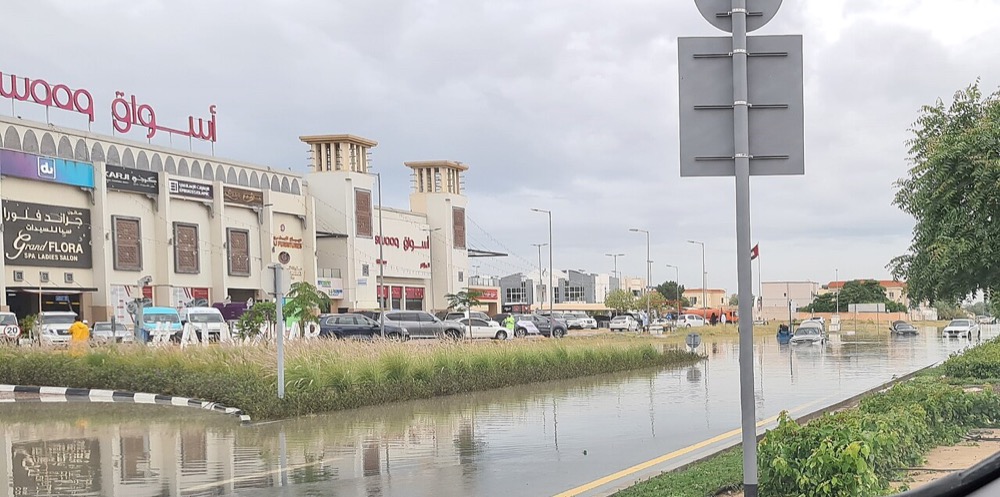
Rain and floods in the desert
Heavy storms now reach the Gulf most years, and floods in Makkah, Jeddah and the Emirates make the news.
- UAE, 15-17 April 2024: 254.8 mm fell at Al Ain in under a day and 164 mm at Dubai airport; roads and runways flooded, five people died.
- Saudi Arabia, 18 April 2026: the National Center for Meteorology warned of heavy rain, hail and flash floods in 12 regions.
- October 2026: Civil Defence warned of flash floods as thunderstorms swept much of the Kingdom, and told people to keep out of valleys.
Wikipedia, '2024 United Arab Emirates floods' (citing the UAE National Center of Meteorology) ↗Gulf News, 'UAE witnesses largest amount of rainfall in 75 years', 17 Apr 2024 ↗Arabia Weather, NCM warning of heavy rain and floods in 12 regions, 18 Apr 2026 ↗News of Bahrain, 'Saudi Arabia warns of flash floods as storms sweep across Kingdom', 17 Oct 2026 ↗
as of 2026-10-29
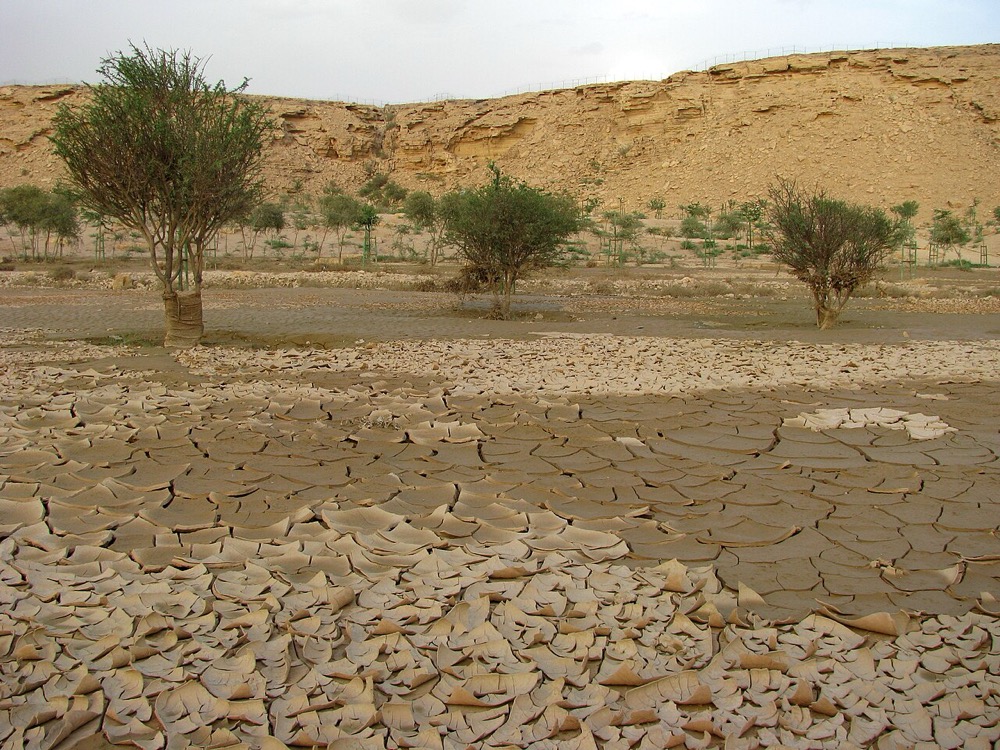
Valleys turning green after rain
After good winter and spring rain, grass and wild plants cover valleys and hills that are bare most of the year.
- Makkah region, August-December 2023: vegetation cover rose from 2.3% to 17.1% of the area, by the National Center for Vegetation Cover's satellite count.
- March 2026: spring rains turned desert green around Hail, Qassim and Rafha and filled the Al-Baha valleys with mist and waterfalls; families went out to camp.
- Spring 2026: Najran's valleys and ravines covered in trees and wild plants after heavy rain (Saudi Press Agency).
- 'This year's greening is mainly due to favorable weather. Valleys are particularly responsive because they absorb runoff as well as nutrient-rich sediments': Dr Mohammad Faisal, King Saud University.
Gulf News, 'Mecca region witnesses 600% surge in vegetation cover in just 5 months', Jan 2024 ↗Arab News, 'Saudi rains turn deserts green, draw crowds outdoors', 30 Mar 2026 ↗Saudi Press Agency, 'Najran's Valleys and Ravines Flourish with Vegetation Cover', 2026 ↗Arab News, 'Rain-fed revival boosts ecosystems across Saudi Arabia', 20 Jun 2026 ↗
as of 2026-10-29
The state is planting: Saudi Green Initiative
Launched by Crown Prince Mohammed bin Salman in 2021, the initiative aims at 10 billion trees across the Kingdom.
- By March 2026: more than 159 million trees planted and the first million hectares of degraded land restored (environment minister Abdulrahman Al-Fadley).
- Next targets: 2.5 million hectares by 2030 and 40 million hectares in the long run.
- Dust storms in 2025 were about half those of the year before, according to the National Cloud Seeding Program (as reported by Arab News).
- 'This achievement proves that land restoration is possible even in the most challenging environments': Yasmine Fouad, head of the UN desertification convention (UNCCD).
Arab News, 'Saudi Arabia restores first million hectares of degraded land under Saudi Green Initiative', 27 Mar 2026 ↗Xinhua, 'Saudi Arabia restores first 1 mln hectares of degraded land, plants 159 mln trees', 28 Mar 2026 ↗Arab News, 'Over 151m trees planted under Saudi Green Initiative', 31 Jul 2025 ↗
as of 2026-03-27 · reviewed monthly
More government steps
Beside tree planting, the Kingdom is harvesting rainwater, sowing native seeds, seeding clouds and greening its capital.
- National Greening Season, launched 7 October 2026: 51,000 ha rehabilitated through rainwater harvesting in two years; this season aims at 60,000 ha more and 110 tonnes of seed from 70 native species, timed with cloud-seeding flights.
- Cloud seeding: in 2023 the programme flew 415 missions over six regions with four aircraft; under ideal conditions a seeded cloud gives up to 20% more rain (National Center for Meteorology).
- Green Riyadh: 7.5 million trees planned for the capital, raising green cover from about 5% to 9% by 2030.
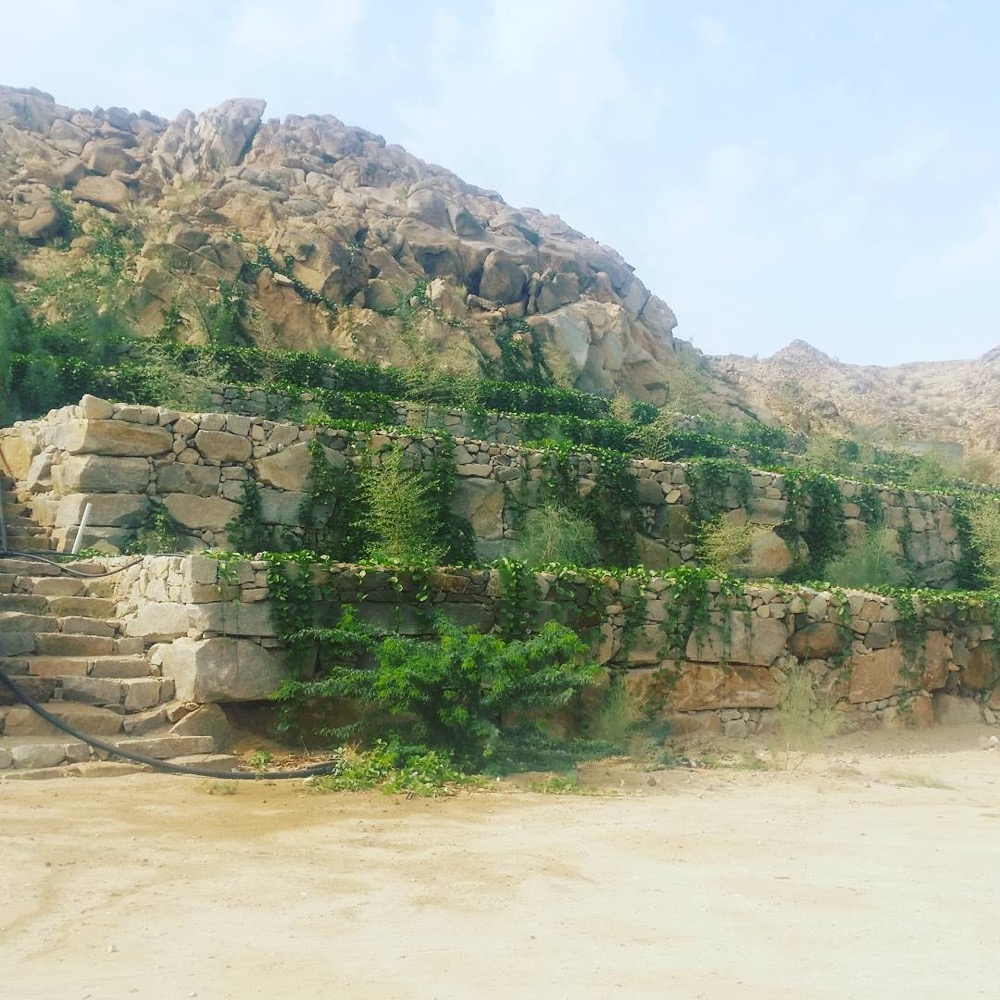
- Rain-harvesting terraces like those at Al Baydha near Makkah hold runoff so trees can grow on bare hills.
Arab News, 'Kingdom launches National Greening Season to expand vegetation cover', 7 Oct 2026 ↗Arab News, 'Saudi Arabia takes major strides in cloud seeding to combat water scarcity', 6 Sep 2024 ↗Arab News, 'Riyadh roads turn green as world's largest urban greening project branches out', 3 Aug 2020 ↗
as of 2026-10-29 · reviewed monthly
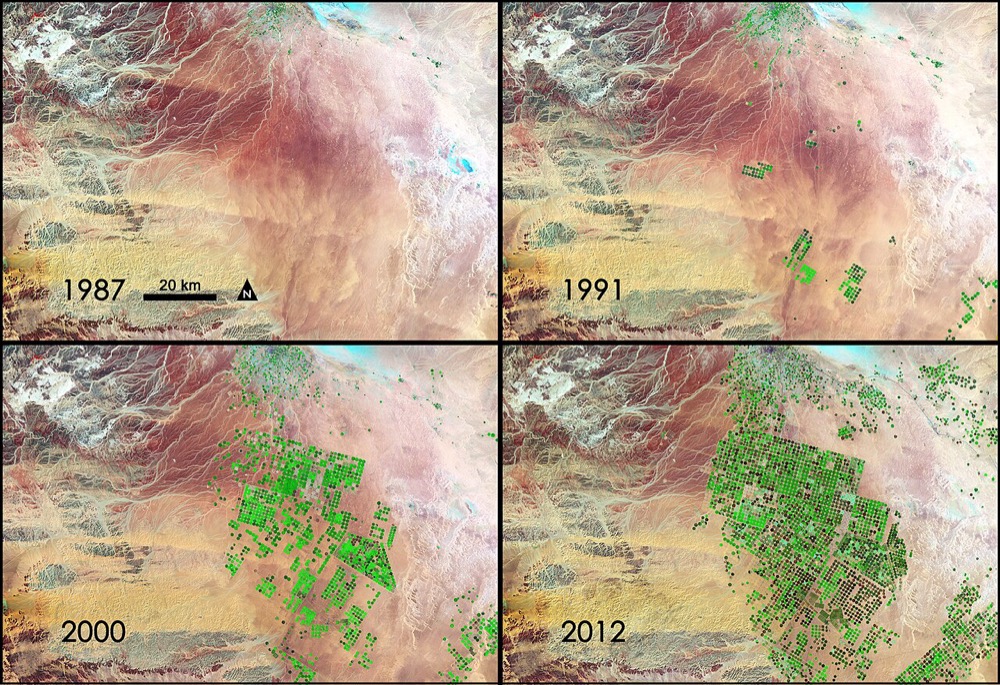
Green fields from underground water
Satellite images of the Wadi As-Sirhan basin show desert turning into thousands of circular fields between 1987 and 2012.
- The fields are watered from deep aquifers filled thousands of years ago, which are not refilled by today's rain.
- This is farming, not the meadows and rivers the narration describes; it is shown because it is often shared as 'Arabia turning green'.
NASA Earth Observatory, 'Agricultural Fields, Wadi As-Sirhan Basin, Saudi Arabia', 2012 ↗
as of 2012-03-21
Arabia was green before
The narration says the land will 'return' to meadows and rivers. Cave deposits from central Arabia show it has been green many times.
- 22 stalagmites from seven caves near Riyadh record repeated wet periods over the past 8 million years (Nature, April 2025).
- In those periods there were lakes and rivers, and animals crossed between Africa and Asia; the wet phases grew shorter and rarer over time.
as of 2025-04-09
Read with care
- Green after rain is seasonal: most of it dries within months. Single wet years, floods and planting drives are not the lasting meadows and rivers the narration describes.
- Tree and hectare counts are the Saudi government's own figures, reported by the press; they have not been independently audited.
- The link between these events and the narration is shown only as context. Whether the sign has appeared is left to the named scholars' views in the sign sequence.
Draft: figures and wording await a researcher's check and the scholar board.