Gharqad tree
In brief
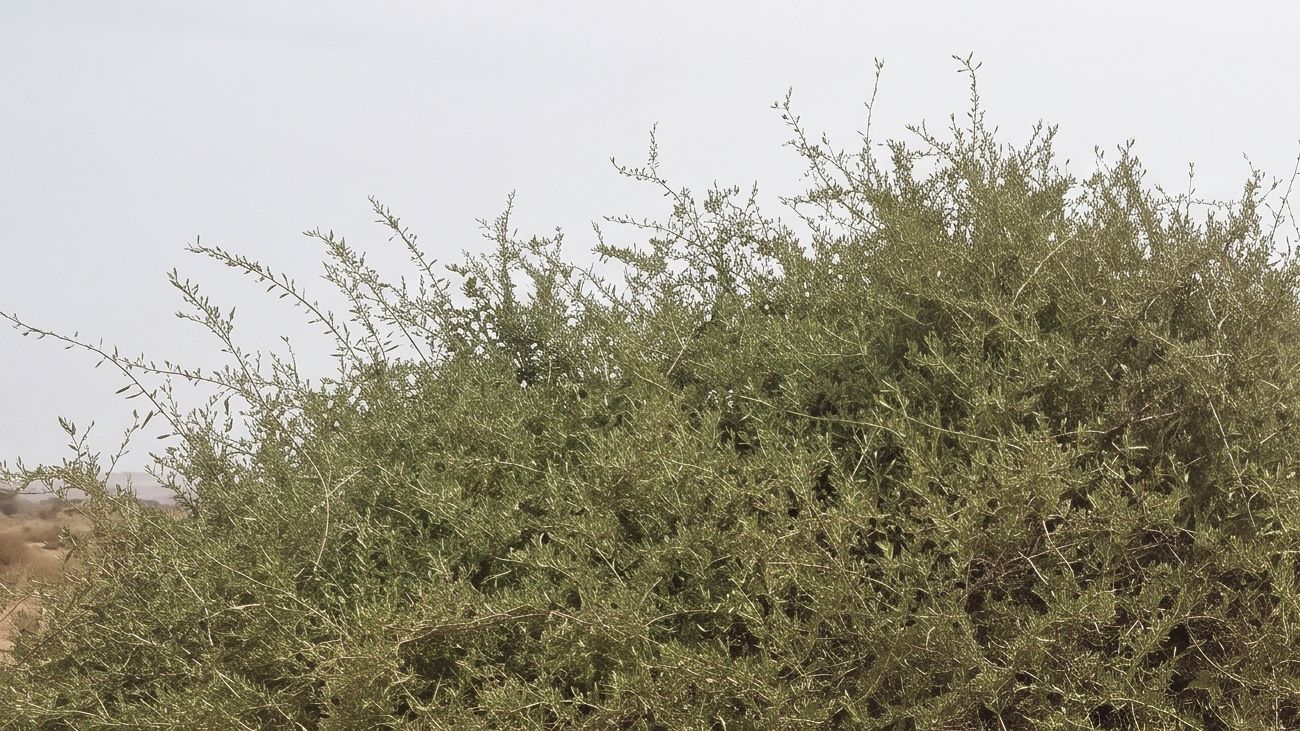
A hadith says that in one final battle even stones and trees will speak and point out those hiding behind them, except the gharqad, a thorny desert shrub also called boxthorn.
This is a miracle described for one particular battle at the very end of time, when nature itself takes part. Scholars such as Ibn Hajar and al-Nawawi place it in the time of Isa (AS), in the fight against the Dajjal's army after the Dajjal has been killed, when Isa leads the believers. It belongs to that moment, not to any conflict of today.
Viral posts claim that a particular state or community is planting gharqad trees on a large scale to hide behind them. There is no evidence for this; the shrub grows naturally across the region. Using this hadith to justify hatred or violence against any people today is a misuse that scholars reject. Islam forbids harming those who are not fighting, and teaches justice toward everyone.
'Let not hatred of a people lead you to injustice. Be just: that is nearer to piety' (al-Ma'idah 5:8).
Where it sits in the sequence
Al-Nawwas ibn Sam'an's narration gives this order: the Dajjal, the descent of Isa (AS) east of Damascus, the Dajjal killed at the gate of Lud, Ya'juj and Ma'juj, then a gentle wind that takes the believers' souls (Sahih Muslim 2937).
Strongest narrations
Read all in the archive →Tags are automatic and unreviewed.
حَدَّثَنَا إِسْحَاقُ بْنُ مُحَمَّدٍ الْفَرْوِيُّ، حَدَّثَنَا مَالِكٌ، عَنْ نَافِعٍ، عَنْ عَبْدِ اللَّهِ بْنِ عُمَرَ ـ رضى الله عنهما ـ أَنَّ رَسُولَ اللَّهِ صلى الله عليه وسلم قَالَ " تُقَاتِلُونَ الْيَهُودَ حَتَّى يَخْتَبِيَ أَحَدُهُمْ وَرَاءَ الْحَجَرِ فَيَقُولُ يَا عَبْدَ اللَّهِ هَذَا يَهُودِيٌّ وَرَائِي فَاقْتُلْهُ ".
Narrated `Abdullah bin `Umar:Allah's Messenger (ﷺ) said, "You (i.e. Muslims) will fight with the Jews until some of them will hide behind stones. The stones will (betray them) saying, 'O `Abdullah (i.e. slave of Allah)! There is a Jew hiding behind me; so kill him
حَدَّثَنَا إِسْحَاقُ بْنُ إِبْرَاهِيمَ، أَخْبَرَنَا جَرِيرٌ، عَنْ عُمَارَةَ بْنِ الْقَعْقَاعِ، عَنْ أَبِي زُرْعَةَ، عَنْ أَبِي هُرَيْرَةَ ـ رضى الله عنه ـ عَنْ رَسُولِ اللَّهِ صلى الله عليه وسلم قَالَ " لاَ تَقُومُ السَّاعَةُ حَتَّى تُقَاتِلُوا الْيَهُودَ حَتَّى يَقُولَ الْحَجَرُ وَرَاءَهُ الْيَهُودِيُّ يَا مُسْلِمُ، هَذَا يَهُودِيٌّ وَرَائِي فَاقْتُلْهُ ".
Narrated Abu Huraira:Allah's Messenger (ﷺ) said, "The Hour will not be established until you fight with the Jews, and the stone behind which a Jew will be hiding will say. "O Muslim! There is a Jew hiding behind me, so kill him
Weak and ungraded reports on this sign
5
Shown for study, not as established. Includes Kitab al-Fitan of Nu'aym ibn Hammad, which is ungraded and weak overall.
Not graded under this archive's policy. The verdicts recorded are listed.
حدثنا أبو عبد الله الأصبهاني، ثنا الحسن بن الجهم، ثنا الحسين بن الفرج، ثنا محمد بن سعد، عن محمد بن عمر، قال: حدثني أبو بكر بن عبد الله بن أبي سبرة، عن عاصم بن عبيد الله، عن عبيد الله بن أبي رافع، عن أبيه رضي الله عنه، قال: كان رسول الله صلى الله عليه وسلم يرتاد لأصحابه مقبرة يدفنون فيها، فكان قد طلب نواحي المدينة وأطرافها، ثم قال: «أمرت بهذا الموضع» يعني البقيع وكان يقال بقيع الخبخبة، وكان أكثر نباته الغرقد، وكان أول من قبر هناك عثمان بن مظعون رضي الله عنه، فوضع رسول الله حجرا عند رأسه وقال: «هذا قبر فرطنا» وكان إذا مات المهاجر بعده قيل: يا رسول الله، أين ندفنه؟ فيقول: «عند فرطنا عثمان بن مظعون»
No translation yet. Arabic only.
AI draft, not reviewed by an editor. Read the Arabic for the meaning.
Not graded under this archive's policy. The verdicts recorded are listed.
حدثنا معاوية، قال: حدثنا زائدة، حدثنا عبد الله بن ذكوان، عن عبد الرحمن الأعرج، عن أبي هريرة، عن النبي صلى الله عليه وسلم قال: " لا تقوم الساعة حتى تطلع الشمس من مغربها، فيؤمن الناس أجمعون، فيومئذ لا ينفع نفسا إيمانها لم تكن آمنت من قبل، أو كسبت في إيمانها خيرا، ولا تقوم الساعة حتى تقاتلوا اليهود، فيفر اليهودي وراء الحجر، فيقول الحجر: يا عبد الله، يا مسلم، هذا يهودي ورائي، ولا تقوم الساعة حتى تقاتلوا قوما نعالهم الشعر "
No translation yet. Arabic only.
AI draft, not reviewed by an editor. Read the Arabic for the meaning.
Not graded under this archive's policy. The verdicts recorded are listed.
وقال: " لا تقوم الساعة حتى يقاتل المسلمون اليهود، فيقتلهم المسلمون، حتى يختبئ اليهودي من وراء الحجر، والشجرة، فيقول الحجر، أو الشجرة: يا مسلم، يا عبد الله، هذا يهودي خلفي، فتعال فاقتله، إلا الغرقد فإنه من شجر اليهود "
No translation yet. Arabic only.
AI draft, not reviewed by an editor. Read the Arabic for the meaning.
Not graded under this archive's policy. The verdicts recorded are listed.
حدثنا علي، أخبرنا ورقاء، عن أبي الزناد، عن الأعرج، عن أبي هريرة، قال: قال رسول الله صلى الله عليه وسلم: " لا تقوم الساعة حتى تقاتلوا اليهود، حتى يختبئ اليهودي وراء الحجر، فيقول الحجر: يا مسلم، هذا يهودي يختبئ ورائي، تعال فاقتله "
No translation yet. Arabic only.
AI draft, not reviewed by an editor. Read the Arabic for the meaning.
What scholars have said
No scholar here cites it as having appeared
Al-Hafiz Ibn Hajar Al-Asqalanid. 852 AH (773-852 AH)
Explains that this battle takes place specifically at the end of times during the descent of Prophet Isa (peace be upon him) and the defeat of the Dajjal (Anti-Christ) and his army, as corroborated in Sahih Muslim (2922). It is not an unconditional license for conflict today, but an eschatological milestone where the deception of Dajjal's forces collapses and natural objects miraculously speak.
Fath al-Bari, Sharh Sahih al-Bukhari (Kitab al-Jihad, 2925-2926)
Imam Yahya An-Nawawid. 676 AH (631-676 AH)
Notes that the Gharqad is a well-known thorny desert shrub in the Levant (Bilad al-Sham) and the Hijaz. He confirms the literal miracle that Allah will grant speech to trees and rocks, exposing those hiding, while the Gharqad remains silent as it is affiliated with them in that prophetic context.
Al-Minhaj Sharh Sahih Muslim (Hadith 2922)
Imam Al-Qurtubid. 671 AH (600-671 AH)
Contextualizes this confrontation following Isa's slaying of the Dajjal at the Gate of Ludd (Lod, Palestine). Nature's universal speech signifies that falsehood will have no refuge or concealment left on earth.
Al-Tadhkirah bi-Ahwal al-Mawta wa-Umur al-Akhirah
Present-day data
These numbers show the world today beside the narration. They do not decide whether the sign has appeared; that is shown only through named scholars, in the Scholars' views tab.
The Gharqad (identified by botanists and classical Arabic lexicographers primarily as Lycium shawii [Arabian boxthorn] and Nitraria retusa) is a hardy, spine-dense desert shrub native to Palestine, the Dead Sea depression, the Negev, and the Arabian peninsula. The Prophet Muhammad ﷺ named it in authentic eschatological hadiths as the tree that remains silent during the final confrontation. Today, intense interest surrounds two verified realities: (1) extensive afforestation and cultivation of Gharqad and drought-hardy thorny shrubs around Israeli settlements, kibbutzim, and desert security barriers, and (2) its distinctive low-slung, ground-level branching where tangled thorny stems spread wide from the root collar, creating an opaque natural barrier so a person behind it remains completely invisible from a distance.
Narrations behind this panel: Sahih al-Bukhari 2925 · Sahih al-Bukhari 2926
What the commentators said it means
- Lexical definition (Lisan al-Arab by Ibn Manzur): 'Al-Gharqad is a species of thorny tree... Abu Hanifah al-Dinawari said: When the Awsaj grows large, bushy, and tangled, it is called Gharqad.' It historically gave Baqi' al-Gharqad in Madinah its name before the cemetery was cleared.
- Dense lower branching architecture: Unlike standard upright forest trees, Nitraria retusa and Lycium shawii develop dense, prostrate woody stems from the root collar right at the soil level. These form impenetrable, opaque mounds (nebkhas) anchored in dunes, blocking all ground-level line of sight.
- Tactical concealment: Because the shrub's lowest branches are heavily interlaced with rigid, needle-like spines touching the earth, any individual crouching, kneeling, or lying behind the mound is completely obscured and invisible to observers viewing from a distance.
| Botanical Feature | Gharqad (Nitraria/Lycium) | Standard Tree (e.g. Pine/Oak) | Tactical/Visual Effect |
|---|---|---|---|
| Ground Clearance (Trunk) | 0 m (Grows from root collar) | 1.5-3.0 m (Bare trunk) | No gap underneath; ground vision blocked |
| Canopy Shape & Spread | Sprawls 3-6 m wide at ground | Elevated crown (2-4 m) | Forms a solid impenetrable hemisphere |
| Distance Concealment | 100% Inaudible & Invisible | Legs/torso easily spotted under trunk | Person crouching behind is totally hidden |
| Physical Barrier / Spines | Dense 2-5 cm needle spines | Smooth bark, no spines | Acts as natural living barbed wire |
Source: Middle East Plant Ecology · retrieved 2026-10-27
News and journals
Dated reports from news outlets, research journals and official bodies, each with its source.
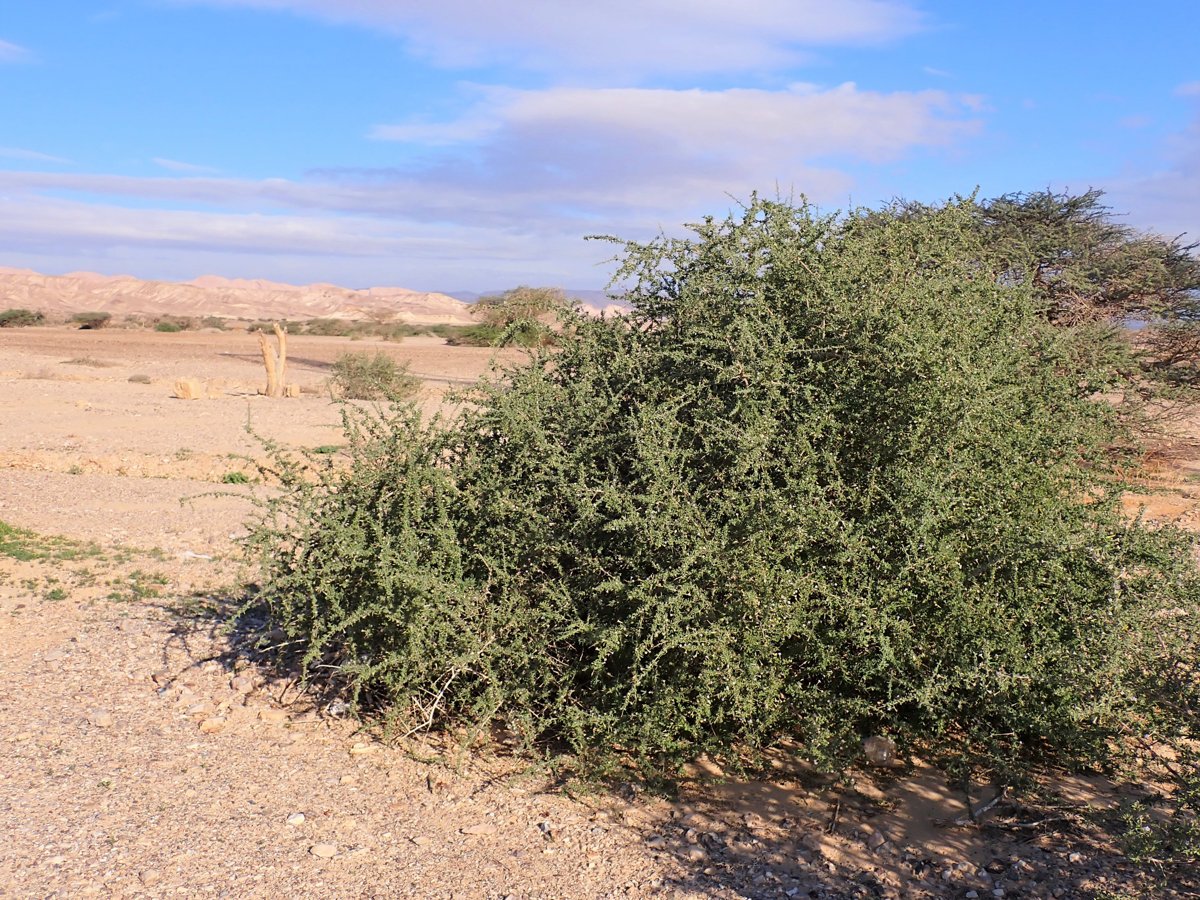
Extensive Cultivation in Settlements & Arid Buffer Zones
Across the Negev desert, Jordan Valley, and perimeter buffer zones surrounding settlements and kibbutzim, extensive plantations of salt-tolerant, drought-resistant thorny shrubs - primarily Lycium shawii and Nitraria retusa - have been planted. Organizations such as KKL-JNF utilize these hardy species for sand dune fixation, desert reclamation, and living security hedgerows that serve as natural razor-wire barriers against intrusion.
KKL-JNF Israel Forestry & Afforestation ↗Flora of Israel Online (Lycium shawii) ↗Israel Nature and Parks Authority ↗
as of 2026-10-28
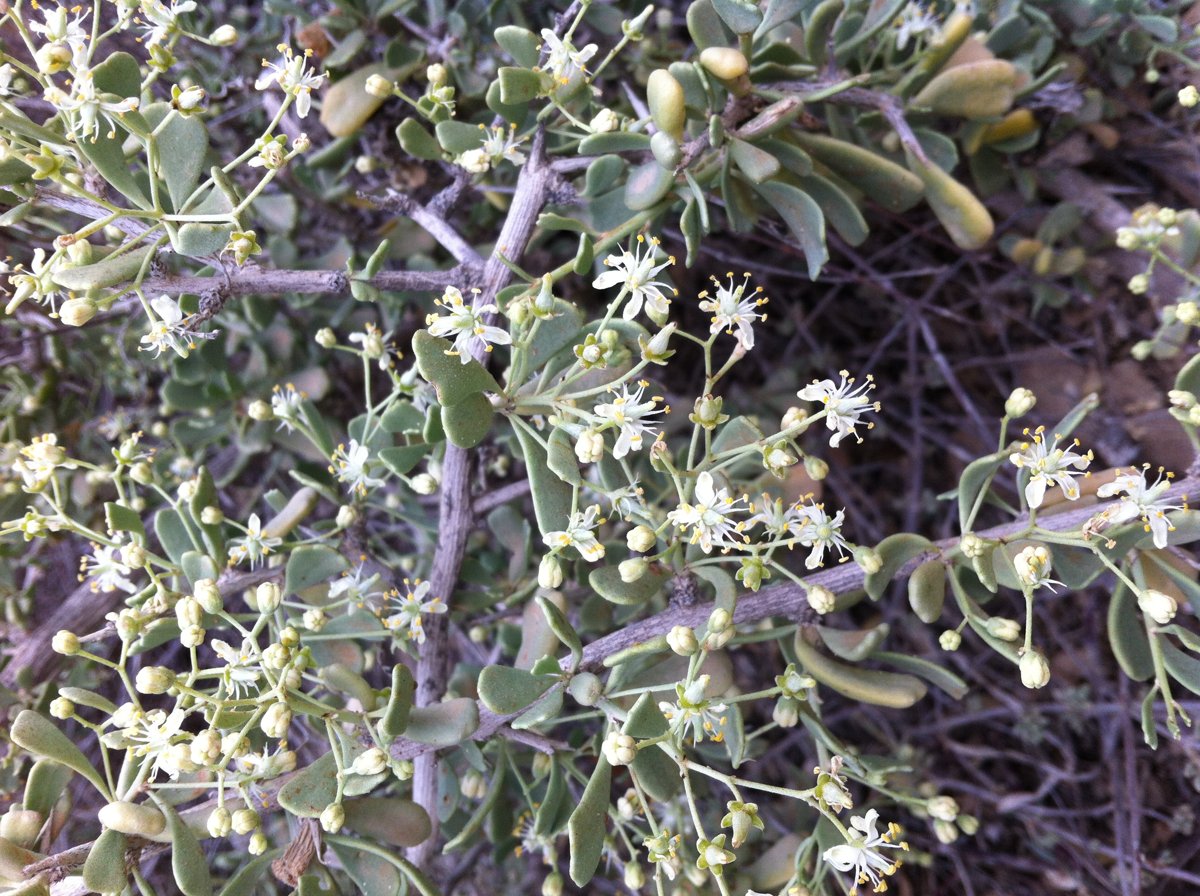
Low Sprawling Growth: Concealing Anyone Behind It From Afar
Botanically, the Gharqad does not develop a tall, clean trunk. Instead, its rigid, spine-laden branches flow and spread profusely across the lower part touching the soil, creating a sprawling, dense hemisphere 1 to 2.5 meters tall and up to 6 meters wide. This low, tangled ground-cover foliage creates an opaque physical screen: a person positioned, sitting, or crouching behind the bush remains completely concealed and invisible to anyone observing from a distance.
Royal Botanic Gardens Kew (Nitraria retusa) ↗Abu Hanifah al-Dinawari (Kitab al-Nabat) ↗Desert Dune Plant Communities Study (JSTOR) ↗
as of 2026-10-28
Read with care
- Eschatological distinction: the hadith describes a battle in the time of Isa (AS) and the Dajjal, as al-Nawawi and other commentators explain; it is not a guide to any present-day conflict, army or people. The shrub's growth habit and where it is planted are botanical and forestry facts only, and say nothing about who the hadith means.
Draft: figures and wording await a researcher's check and the scholar board.